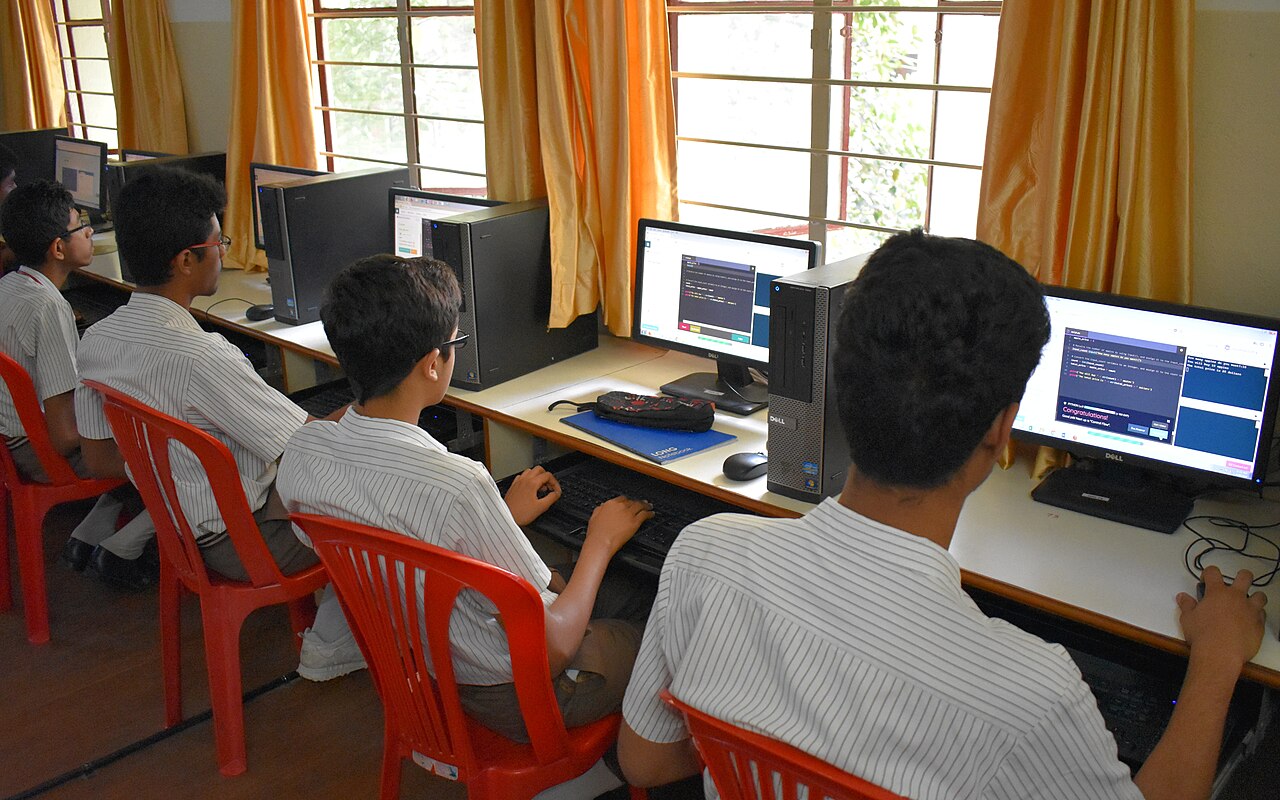
Schools and colleges no longer have to decide whether artificial intelligence will enter the classroom. Students and teachers are already using it. The practical decision is how an institution can permit useful AI work without weakening learning, privacy or academic judgment.
Microsoft's new education principles put educator control, student safety and durable learning at the centre. They are company commitments, not a ready-made policy for every Indian institution, but they provide a useful checklist for administrators who are still relying on informal rules.
What Microsoft Has Committed To
In its September 2026 education announcement, Microsoft set out five principles: safety and transparency by design, educator control, AI that supports rather than replaces student thinking, stronger education systems and preparation for an AI-shaped future.
The company also described a Privacy and Safety Standard for its education products. The stated commitments include limits on the use of student and educator data, human oversight for consequential decisions, transparency for families and institutional ownership of the knowledge schools create.
Those commitments are relevant to procurement, but a school should still verify the terms attached to the exact product and account type it plans to deploy. A broad corporate principle cannot substitute for a written data-processing agreement, configured administrator controls and a process for handling incidents.
Start With The Learning Goal
An AI tool should be introduced for a named educational problem. Examples include giving students additional practice, helping teachers adapt reading material, translating parent communication or reducing repetitive administrative work. "We need an AI strategy" is too vague to evaluate.
The question to ask is simple: what should the student or teacher be able to do better after using the tool? If the answer is only that an assignment will be completed faster, the institution may be automating the visible task while removing the thinking that produced learning.
Cognitive Offloading Is A Real Design Risk
Microsoft's announcement warns about cognitive offloading: students can appear to have learned because a polished answer exists, even when they did not perform the reasoning needed to retain the idea. This is not solved by banning every AI tool. It is addressed through assessment design and transparent use.
A teacher might allow AI during brainstorming but require students to defend their final choices in person. A programming course could permit code suggestions while asking learners to explain a bug and modify the solution under supervision. A writing class might compare a generated draft with primary sources and grade the quality of the corrections.
IndiaPress has previously covered the trends shaping online learning in 2026. The next step for institutions is to turn that broad change into specific classroom rules rather than leaving every teacher to improvise.
Privacy Questions Belong In Procurement
Before approving a product, institutions should document what data enters the system, where it is processed, how long it is retained and whether it is used to improve models. Children's data, disability information, assessment records and counselling conversations need especially careful treatment.
UNESCO's guidance on generative AI in education recommends a human-centred approach, protection of data privacy and age-appropriate use. For an Indian school, that means involving academic leadership, IT, legal or compliance staff, teachers and parents before a platform becomes the default.
A Practical Policy For Teachers And Students
A short policy is more useful than a long document nobody reads. It should separate allowed, restricted and prohibited uses.
- Allowed: practice questions, language support, brainstorming and explanations where no sensitive data is entered.
- Restricted: assessed work, coding assignments or research assistance that must be disclosed and cited according to course rules.
- Prohibited: impersonation, fabricated references, uploading confidential records or using AI during a closed assessment.
The policy should also explain what happens when a tool gives harmful advice, exposes data or produces discriminatory output. Students need a safe reporting route, and teachers need authority to pause a tool while the issue is reviewed.
Train Educators Before Measuring Adoption
Counting active accounts does not show whether AI improved education. Teachers need time to test the product, compare its answers with course material and design assignments that still reveal student understanding. Training should include failure modes, source checking and privacy, not only prompt techniques.
Institutions can begin with a small pilot involving one subject and a limited group of teachers. Useful measures include time saved on a defined task, student error patterns, accessibility improvements, complaints, privacy incidents and whether learning outcomes changed. Expansion should follow evidence, not pressure to announce an AI programme.
What Indian Institutions Should Do Next
Form a small review group, list existing unofficial AI use and select one low-risk workflow for a supervised pilot. Write the learning goal and data rules before selecting the vendor. Make disclosure expectations clear to students, and preserve a non-AI route for learners who cannot or should not use the system.
Students who want to develop their own skills can use this curated guide to free online courses in 2026, but institutions should distinguish independent learning resources from systems that process formal student records.
Conclusion
Microsoft's principles are a useful signal that education technology is moving from experimentation toward governance. Indian schools and colleges should use the moment to write their own rules: protect student data, keep teachers in control and design AI use around genuine learning. The best first step is a small, measurable pilot with a clear learning goal, not a campus-wide rollout driven by novelty.