
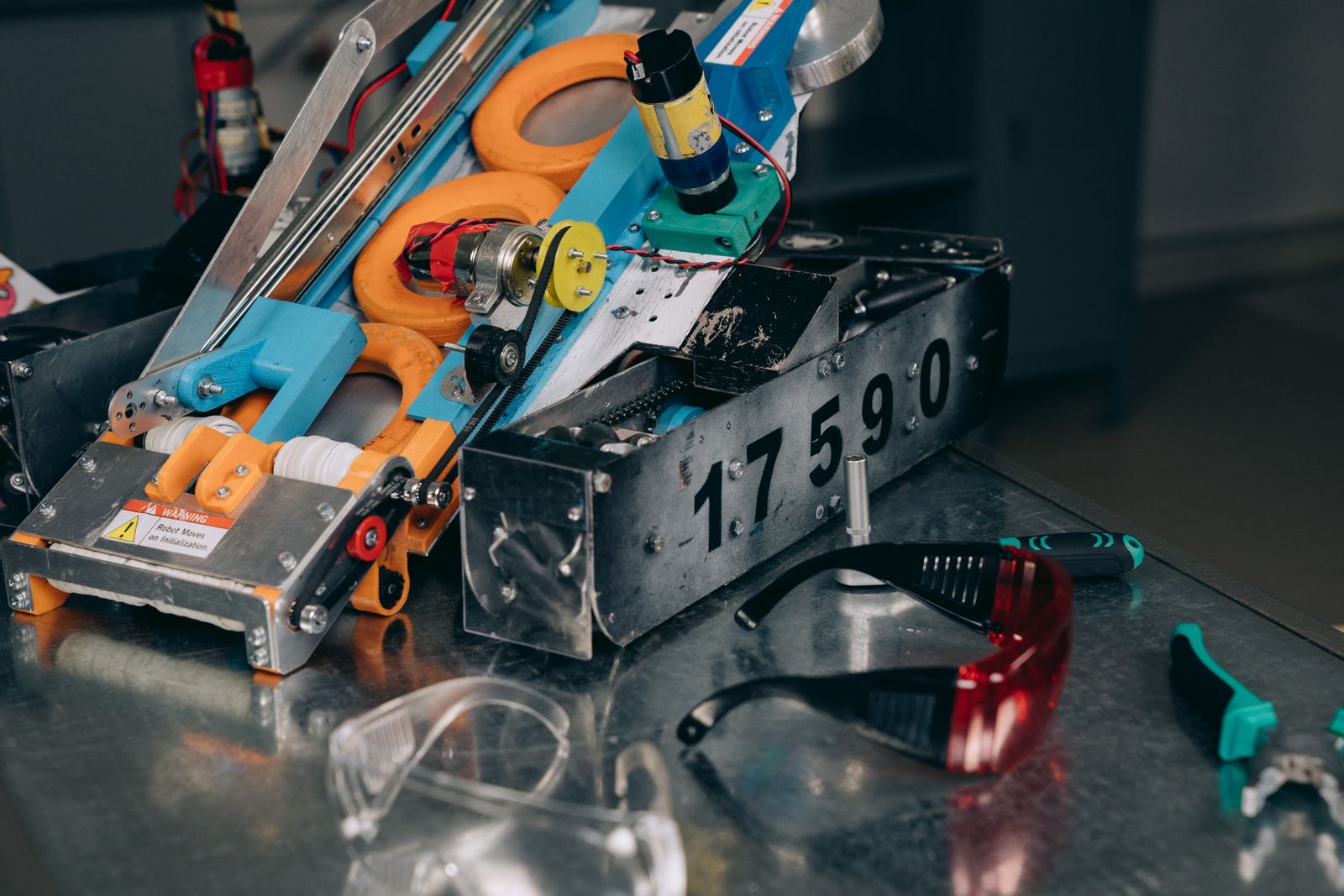
A construction robot can perform neatly in a controlled demonstration and still fail on an active Indian job site. Dust, changing surfaces, mixed crews, unreliable connectivity and shifting work zones turn a promising prototype into an operations problem.
That gap matters after IIT Madras inaugurated a construction robotics laboratory with Bechtel India on 22 September 2026. The official IIT Madras announcement says the ₹3.30-crore facility will support research, testing, demonstrations and industry-led exploration. For construction companies and research teams, the useful next question is narrower: which site problem deserves a pilot, and what evidence would justify moving beyond it?
Start With A Repeated Site Problem, Not A Robot
The strongest pilot brief begins with work that can be observed and measured. A team might examine repetitive progress imaging, material movement along a fixed route or inspection in a restricted zone. “Use robotics on our project” is not a testable brief.
Document who performs the task, where delays occur, how often conditions change and what a safe handover looks like. This prevents an impressive machine from being paired with a low-value problem. It also exposes cases where a simpler camera, jig or workflow change may be the better answer.
Separate A Lab Result From Job-Site Readiness
A lab proves that a technical approach can work under stated conditions. A pilot asks whether it can work repeatedly inside a real construction process. Those are different claims.
Teams evaluating construction robotics pilots in India should define the operating envelope: surface quality, light, dust, temperature, rain exposure, network availability, clearance around workers and acceptable setup time. A pass recorded only in favourable conditions should not be treated as proof for an entire project.
This is similar to the discipline used for other edge systems. IndiaPress24's guide to testing multilingual edge-AI prototypes outside the cloud explains why field conditions, hardware limits and escalation paths matter after a demonstration.
Use Four Gates Before Approving A Pilot
A practical review can use four gates. A proposal should clear each one before equipment reaches a live work area.
| Gate | Question | Evidence to request |
|---|---|---|
| Task fit | Is the task repeated, bounded and worth improving? | Baseline time, error or exposure data |
| Technical fit | Can the system handle the actual environment? | Operating limits and failure tests |
| Workflow fit | Can crews use it without creating a new bottleneck? | Setup, training and handover plan |
| Decision fit | Will the pilot produce a clear next decision? | Success threshold and stop rule |
The last gate is often missed. A pilot without a pre-agreed decision becomes an open-ended demonstration. Define whether the result will lead to another controlled test, a larger trial, a redesign or a stop.
Measure Reliability, Not Just The Best Run
Cycle time is useful, but it is not enough. Record successful runs, interventions, resets, setup time and the reasons work stopped. Note whether performance changes across shifts or site zones.
For a vision-based inspection system, for example, image quality may fall when lighting changes or dust covers a lens. The relevant measure is not the sharpest sample; it is the proportion of usable inspections under the agreed operating envelope. Keep false alerts and missed detections separate because they create different site consequences.
Plan Human Control And Recovery First
Every pilot needs a named operator, a supervisor who can stop the trial and a recovery procedure. Workers should know the machine's work zone, warning signals and manual fallback. Training attendance alone does not show that a crew can respond to a fault.
Limit early trials to a bounded area and time window. Do not make the pilot the only way to complete a critical task. If the system loses connectivity, encounters an obstacle or produces uncertain output, the safe response should already be written and rehearsed.
Label The Economics As A Worked Example
Illustrative example: suppose a team tests automated progress capture on one floor for ten shifts. It should record operator hours, setup time, rework, unusable scans and the time engineers spend reviewing output. These figures are hypothetical inputs, not a prediction of savings.
Compare the complete pilot workflow with the existing method. Include transport, calibration, supervision, data review, maintenance and downtime rather than comparing only the robot's active minutes with manual labour. A slower first trial may still teach something valuable, but it should not be presented as a productivity gain.
Keep A Pilot Evidence Pack
Before the final review, collect a compact record that another project team can understand:
- the task definition and baseline;
- site map, work-zone boundaries and operating limits;
- test cases, including adverse but permitted conditions;
- interventions, faults and near misses;
- worker feedback and training changes;
- data ownership, access and retention decisions;
- cost inputs, success thresholds and the final go, revise or stop decision.
For founders, the same discipline keeps a research claim separate from a product claim. The counterpart IndiaPress Live guide on the India 6G roadmap and startup product decisions offers a related lesson: standards, infrastructure and a credible use case should shape the build before a headline does.
Conclusion
The new IIT Madras facility creates a useful place to explore construction automation, but deployment readiness will be earned task by task. Choose one repeated problem, define the operating envelope, protect the crew and agree on the evidence that changes the next decision. A small pilot with a clear stop rule is more valuable than a broad demonstration that cannot explain what worked.