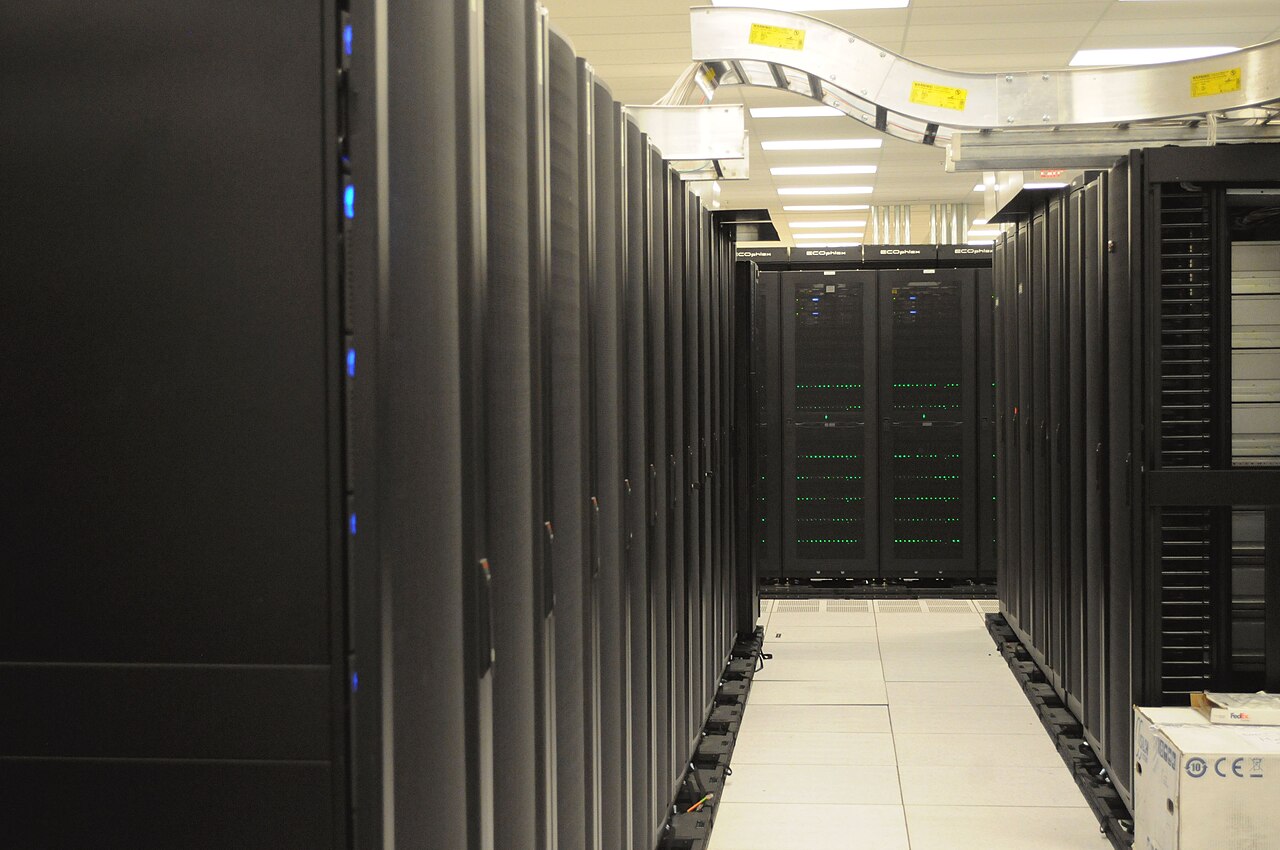
India's government says the data-centre sector could attract around US$200 billion in investment as cloud and artificial-intelligence workloads expand. The figure signals ambition, but data centres cannot be built from capital alone. Reliable power, suitable land, network connectivity, cooling, approvals and skilled operations determine whether announced capacity becomes usable infrastructure.
For businesses and state governments, the important question is where the bottlenecks sit and how to avoid shifting the cost of digital growth onto an already constrained power or water system.
What The Government Announced
A Commerce and Industry Ministry roundtable brought together central and state representatives, hyperscalers, developers, investors and infrastructure companies. The discussion focused on power, ready-to-use land, regulation and project timelines.
The announcement says hyperscalers accounted for more than 80% of data-centre absorption in the first half of 2026. It also notes that the National Building Code 2026 recognises data centres under Group E and includes a dedicated annex covering fire-risk assessment and performance indicators.
US$200 Billion Is Potential, Not Completed Investment
The headline number should be read as potential investment discussed by government and industry, not as money already committed to operating facilities. Data-centre projects have long development cycles and can change with financing costs, chip supply, customer demand and the availability of power.
Clear reporting should separate memoranda, announced projects, projects under construction and commissioned IT capacity. It should also distinguish the cost of land and buildings from servers, network equipment and recurring energy use.
Power Availability Is The First Constraint
Data centres require continuous electricity and backup systems, while AI-focused facilities can create large and variable loads. The roundtable discussed cluster-based transmission, substations, sanctioned load from the first day, dual feeders and renewable-energy procurement across state boundaries.
The International Energy Agency's 2026 analysis of energy and AI says global data-centre electricity use grew 17% in 2025, with AI-focused facilities rising faster. Its central projection puts global data-centre demand near 950 terawatt-hours by 2030.
India's projects need generation, transmission and local distribution planning to move together. A facility that is completed before its power connection may remain an expensive shell.
Clean Energy Claims Need Hourly Context
Buying renewable certificates or signing a solar agreement can improve the annual emissions profile, but a data centre runs at night and during low-renewable periods as well. Operators should disclose the difference between annual matching and electricity supplied at the time of consumption.
States can encourage additional renewable generation, storage and grid upgrades without pretending that every megawatt is carbon-free at every hour. Transparent energy metrics will help customers compare facilities and prevent broad sustainability claims from replacing operational data.
Land Must Be Ready For More Than Construction
A suitable parcel needs fibre routes, power access, flood and heat-risk assessment, water planning, transport and a permitting path. The government's discussion of data-centre-ready land banks and power-ready parcels addresses a common source of delay.
However, speed should not remove local review. Communities need information about water use, generator emissions, traffic, noise and the infrastructure costs a public authority may be expected to carry.
Cooling And Water Choices Will Vary By Region
Cooling design depends on climate, server density and service-level requirements. Some systems use more water to reduce electricity, while others use more electricity to reduce water. There is no single best design for every Indian city.
Operators should publish water-use effectiveness alongside power-use effectiveness, explain whether water is potable or recycled and plan for hotter conditions. State incentives can reward transparent efficiency rather than only installed capacity.
What The Expansion Means For Indian Businesses
More domestic capacity can improve latency, availability options and access to cloud and AI infrastructure. It may also support data-residency needs and create demand for network engineers, electricians, cooling specialists, security teams and facility operators.
Local capacity does not automatically make a workload cheaper or compliant. A customer still needs to evaluate the provider's region design, redundancy, contracts, data handling, egress charges and incident response. IndiaPress's edge computing guide explains when work should move closer to users, while the microservices and Kubernetes guide covers application-level scaling choices.
A Checklist For States And Project Buyers
- Report committed, under-construction and commissioned capacity separately.
- Confirm the power connection and transmission plan before construction milestones.
- Assess heat, flood and water risk for the specific site.
- Require clear fire, backup-fuel and emergency-response plans.
- Publish energy and water efficiency using comparable definitions.
- Check carrier diversity and whether fibre routes share the same physical risk.
- Link incentives to delivered capacity, jobs, efficiency and compliance rather than announcements alone.
Where The Jobs Will Be
Construction creates a large temporary workforce, but long-term operations rely on specialised roles. Training programmes should cover electrical systems, cooling, networking, physical security, cloud operations and safety. States competing for projects can create more durable value by developing that workforce and supplier base instead of focusing only on land incentives.
Conclusion
India has a credible opportunity to become a larger data-centre and AI-infrastructure hub, but the US$200 billion figure should be treated as a direction rather than an accomplished result. The projects that succeed will secure reliable power, suitable land, network diversity, efficient cooling and transparent approvals together. Governments and customers should judge the expansion by commissioned capacity and operating performance, not the size of announcements.