
The votes have been counted, but Israel still does not have an agreed next government. The Israel election 2026 results reported on 30 October leave Benjamin Netanyahu's political camp with 53 seats, the opposition grouping led by Gadi Eisenkot with 48, and Arab-led parties with 19 in the 120-member Knesset.
That outcome answers who will sit in parliament. It leaves the harder question, who can assemble enough parliamentary support to govern, open. Likud finishing first does not automatically give Netanyahu a new term, while his opponents cannot treat their combined opposition to him as a coalition agreement.
This explainer reflects reporting available on 30 October 2026. Government-formation negotiations can change the position after publication.
Israel Election 2026 Results: The Seat Count
The Times of Israel's completed-count report gives the following distribution. These are political groupings used to explain the result, rather than three individual parties.
| Political grouping | Seats | Position against 61 seats |
|---|---|---|
| Netanyahu-aligned parties | 53 | Eight short |
| Eisenkot-led opposition grouping | 48 | Thirteen short |
| Arab-led parties | 19 | A separate grouping |
| Total Knesset membership | 120 | 61 is an absolute majority |
Among individual lists, Likud has 27 seats and Eisenkot's Yashar has 21. The Joint List has 11 and Ra'am eight, accounting for the Arab-led parties' combined 19. Reported turnout was 77.9%.
For readers following from India, keep the table's two levels separate: a party's result and a potential government's support. A headline about the biggest party answers the first question. It cannot, by itself, settle the second.
Why Neither Main Camp Has a Straightforward Route
The immediate problem is political compatibility. Reuters' reporting on 28 October described an opposition stretching from the centre-left to the hard right, with many Jewish political leaders rejecting the Arab parties' support. The subsequent completed count has not turned those differences into an agreement.
Adding 48 and 19 produces 67 seats. It is useful arithmetic, but it assumes cooperation that cannot be taken for granted. Parties would still need to accept a governing arrangement, its leadership and the terms on which they would support it. Sharing an objection to the incumbent does not settle those choices.
Netanyahu's camp faces the corresponding difficulty: 53 seats leave it below an absolute majority. It would need a workable arrangement beyond its existing grouping, or a different parliamentary configuration. Reporting the gap is reasonable; predicting which party will cross it without an agreement would be speculation.
Who Chooses the Person Asked to Form a Government?
President Isaac Herzog has a formal role in the next stage. The Israel Democracy Institute's government-formation explainer says the president consults parliamentary factions and assigns the task to a Knesset member judged able to secure parliamentary confidence. The leader of the largest faction does not have an automatic entitlement.
Receiving that assignment gives someone an opportunity to negotiate. It does not itself make that person the next prime minister. The proposed government must still win the Knesset's confidence.
Watch the wording of announcements carefully. A party recommending a candidate to the president, a candidate receiving the mandate, and a cabinet winning its confidence vote are separate events. Treating any of the earlier stages as the completed transfer of power would run ahead of the evidence.
Does a Government Always Need 61 Votes?
Sixty-one seats provide an absolute majority of the Knesset and are the familiar target for a stable coalition. There is a qualification, though. The Israel Democracy Institute explains that a minority government can take office when more members support it than oppose it in the confidence vote.
Cabinet membership, outside support and abstention therefore have different meanings. A party can affect whether a government survives without necessarily accepting ministerial posts. None of those possibilities establishes that an arrangement has actually been negotiated in this election.
This is why descriptions such as “needs eight more seats” are best read as shorthand for reaching an absolute majority. They are helpful for understanding the numbers, but should not obscure the confidence-vote rules.
The Timetable Starts With Formal Steps
The completed count and formal publication should also be distinguished. Current reporting schedules presentation of the official results to Herzog for 4 November, following final checks. That milestone was still ahead as of this article's publication.
The Presidency's published timetable provides for official publication within eight days of the election and assignment of the government-formation task within seven days of official publication, after consultations. The first nominee then has 28 days, with extensions totalling no more than 14 additional days.
Those negotiating days run from the assignment, rather than automatically from polling day. If the first attempt fails, the constitutional process allows further stages. Another election becomes possible if the process is exhausted; it has not already been called merely because the count produced no clear governing majority.
What Remains in Place While Talks Continue?
Netanyahu remains in office in a caretaker capacity while a successor government is being formed. As Reuters explains, a caretaker administration continues to exercise government powers, although it faces duties of restraint. An inconclusive election does not create an immediate administrative vacuum.
For readers assessing the next development, look for a named mandate recipient, an announced parliamentary support arrangement and the confidence-vote outcome. These are firmer indicators of a change in government than victory speeches or combinations of seat totals circulating online.
Conclusion
The Israel election 2026 results establish a fragmented parliament. They do not yet establish the next governing coalition. Follow the formal mandate and confidence process before concluding that either Netanyahu has secured another government or Eisenkot has replaced him.
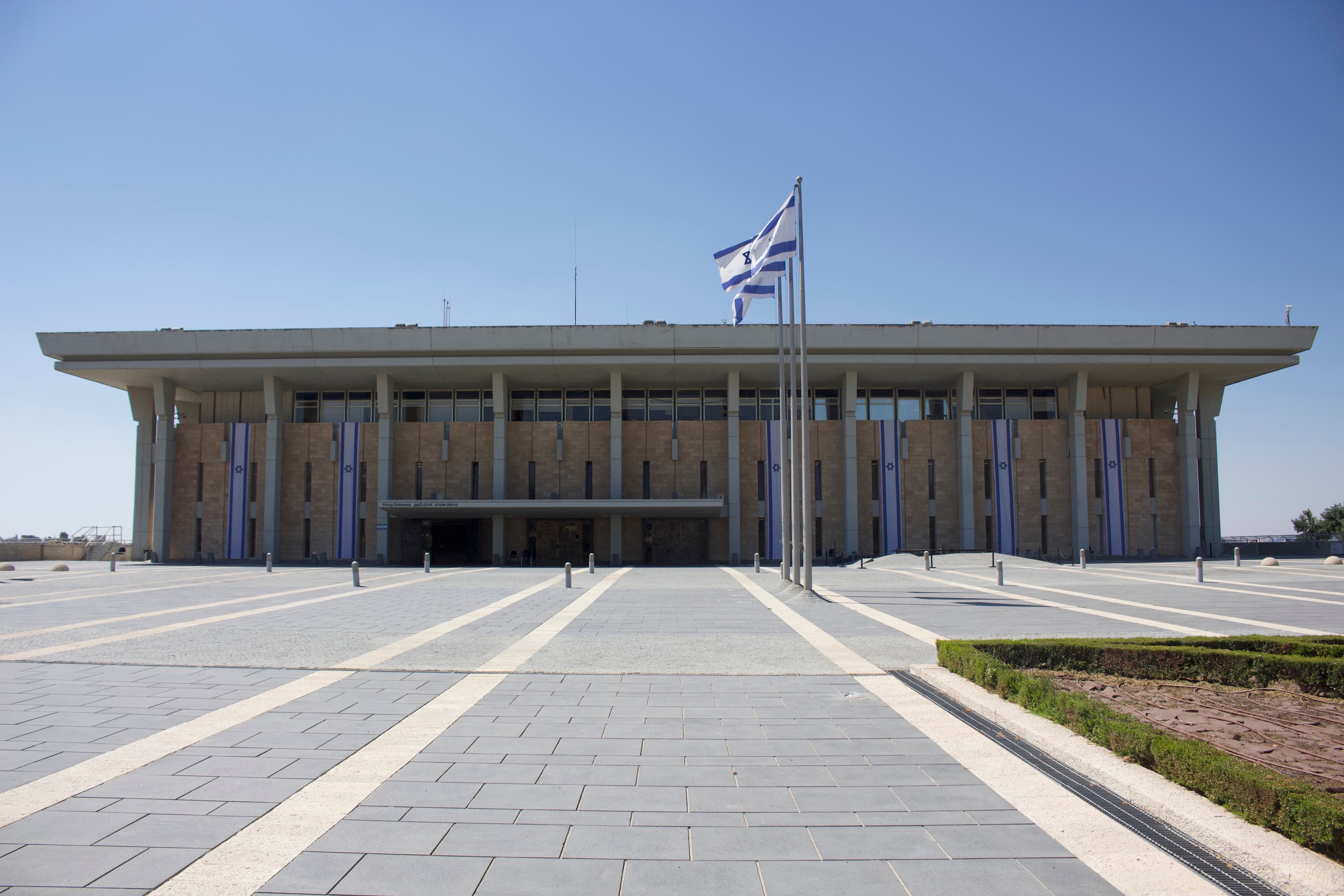
Featured photograph: Clema12, “Knesset front side - 2022,” Wikimedia Commons, 3 July 2022; CC BY-SA 4.0. File photograph of the Knesset in Jerusalem, not a photograph of the 2026 vote. Original photograph used; the website may resize it for display.