An apparent cyber intrusion affected an unclassified system used by the CIA and the Office of the Director of National Intelligence (ODNI) for open-source intelligence work, according to two people familiar with the matter cited by The Washington Post. The sources said the breach took place several weeks before the report and did not expose classified information. An ODNI official told the newspaper that critical capabilities and classified systems were not disrupted. The CIA declined to comment.
- System: an unclassified network used for open-source intelligence analysis.
- Reported impact: no disruption to critical capabilities or classified systems, according to an ODNI official quoted by The Washington Post.
- Still unknown: who was responsible, how access occurred, and what unclassified information may have been reached.
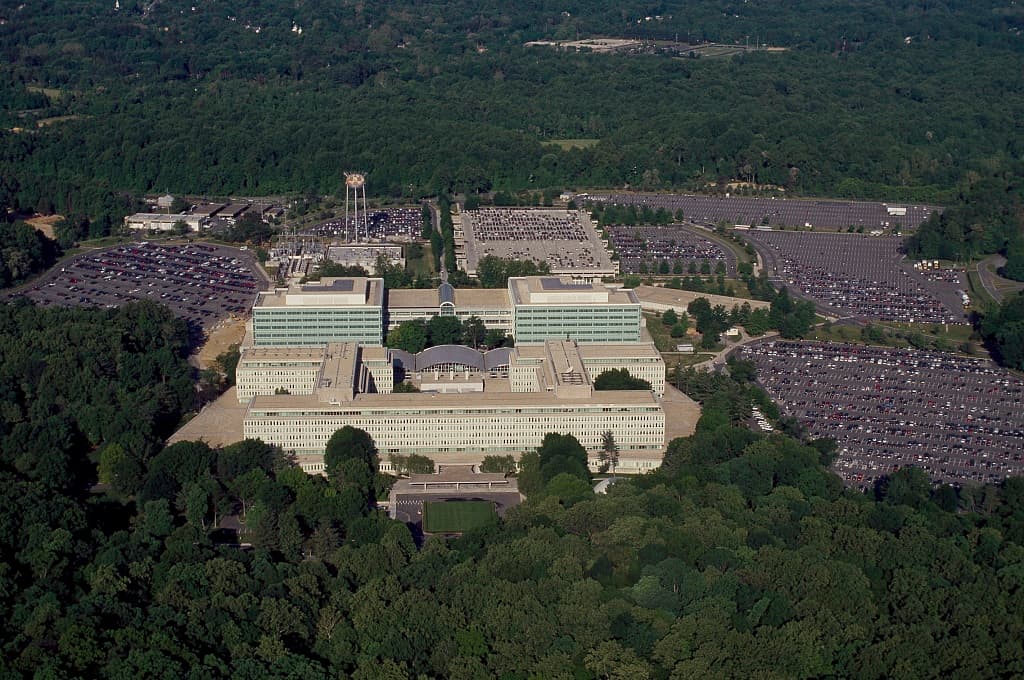
Image: Aerial view of CIA headquarters in Langley, Virginia, photographed by Carol M. Highsmith. It shows the agency headquarters, not the affected network. Library of Congress; public domain.
What the breach reports establish
The Washington Post reported that the CIA and ODNI discovered an apparent intrusion affecting unclassified but sensitive networks used to handle open-source intelligence. Its account cited two people familiar with the matter. The report says the breach took place several weeks earlier but gives no exact date. Those sources said classified information was not exposed; an ODNI official separately told the newspaper there had been no disruption to critical capabilities or classified systems.
These are attributed reports, not a public technical incident notice from either agency. The sources do not identify an attacker, explain a vulnerability, or provide a list of affected records. The CIA declined to comment to the Post. The distinction matters: readers can report what sources said, but should not turn those statements into a claim that the agencies have published a complete forensic finding.
What open-source intelligence means
Open-source intelligence, or OSINT, is more specific than ordinary web research. In its 2024–2026 Intelligence Community OSINT Strategy, the CIA and ODNI define it as intelligence derived exclusively from publicly or commercially available information to address intelligence priorities, requirements, or gaps. The strategy describes OSINT as a core intelligence discipline and sets out four priorities for the community:
- Coordinate the acquisition of open-source data and expand sharing.
- Integrate open-source collection management across the intelligence community.
- Use innovation to develop new OSINT capabilities.
- Develop the next generation of OSINT professionals and tradecraft.
This official context explains why the system’s function matters: OSINT work includes acquiring information, organising it, and analysing it against intelligence questions. It does not reveal which of those functions were handled by the affected system or which, if any, were accessed during the reported intrusion.
Why “unclassified” does not answer every impact question
Unclassified information is not automatically public in the sense that the system holding it is open to everyone. The Washington Post reported that analysts need access to outside websites and networks to collect OSINT. The information may come from public sources, commercial providers, or analysts’ work to connect separate items. The CIA/ODNI strategy describes OSINT as information tied to intelligence priorities, requirements, or gaps, which helps explain why analysts’ collection work has a defined mission rather than being casual browsing.
That context does not prove that analysts’ searches, commercial feeds, working notes, or any particular dataset were accessed in this case. Those are examples of the kinds of material that can exist in OSINT work, not confirmed items from the affected system. The available reports do not say that information was copied, altered, or published.
What ODNI’s status comment does—and does not—answer
The ODNI official’s comment addresses disruption to critical capabilities and classified systems. It is a meaningful status update, but it does not identify which unclassified information may have been reachable or whether investigators found evidence of data removal. The sources’ account that classified information was not exposed is likewise limited to that point; it does not establish the full scope of access to unclassified material.
The public record therefore supports three separate statements: an intrusion was reported; sources told the Post that classified information was not exposed; and an ODNI official said critical capabilities and classified systems were not disrupted. The actor, entry method, specific unclassified information affected, and investigation findings have not been publicly described in the reporting cited here.
What readers should watch for
A fuller account would identify the affected system, give a confirmed timeline, explain whether investigators found evidence of access or data removal, and describe the remediation. Neither the Washington Post report nor the CIA/ODNI strategy provides those incident details: the strategy explains the mission, while the news report describes what sources and an ODNI official said about this event.
There is also no evidence in the cited reporting that this incident was connected to unrelated outages or other government cyber incidents. Similar timing alone does not establish a shared cause or coordinated campaign.
The takeaway
The best-supported description is a reported breach of an unclassified CIA/ODNI system used for OSINT analysis. Sources cited by The Washington Post said classified information was not exposed, and an ODNI official said critical capabilities and classified systems were not disrupted. The public account still does not establish who was responsible or what unclassified information, if any, was accessed. The incident’s technical scope should remain open until agencies or investigators provide attributable findings.