
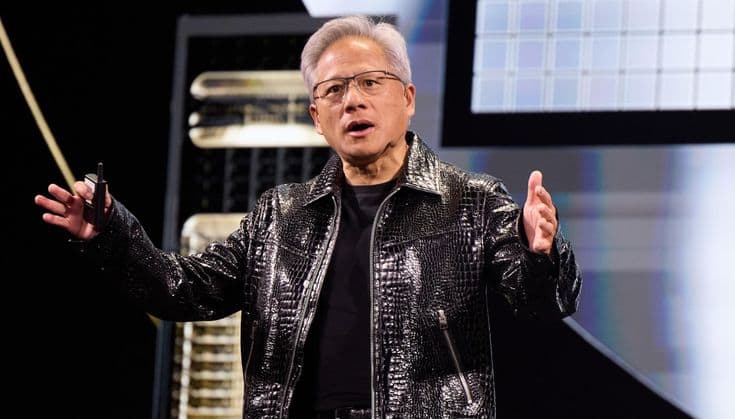
Nvidia has confirmed that Jensen Huang has resigned as its president, chief executive and a member of its board, effective immediately. The company’s board appointed chief financial officer Colette Kress as interim CEO while it searches for a permanent successor. The announcement ends Huang’s 33-year run as the company’s central public leader and raises an immediate question for customers, employees and the wider AI industry: how will Nvidia manage a major leadership transition while demand for its chips remains central to technology investment?
The confirmed facts are narrower than the rumours that circulated before the announcement. Nvidia’s November 12 statement sets out the leadership change and interim arrangement but does not give a detailed reason for the resignation. The company also says its operations, customer commitments and product roadmap are expected to continue. Those are management assurances; investors and customers will judge continuity through subsequent execution and disclosures.
How Nvidia shares moved around the resignation
To put the announcement in context, compare Nvidia’s last close before the resignation news with the next trading session. NVDA closed at $173.73 on November 11. On November 12, the day the company announced Jensen Huang’s departure, the stock opened at $151.01, reached an intraday low of $148.80, and closed at $166.19.
| Trading point | Share price | Change from Nov 11 close |
|---|---|---|
| Nov 11 close, before announcement | $173.73 | Reference point |
| Nov 12 opening price | $151.01 | −$22.72 (−13.08%) |
| Nov 12 intraday low | $148.80 | −$24.93 (−14.35%) |
| Nov 12 closing price | $166.19 | −$7.54 (−4.34%) |
That means the shares recovered $17.39 from the intraday low by the close, but still finished $7.54 below the previous session. These figures describe the share-price movement; they do not establish that the CEO announcement alone caused the entire move. Nvidia shares had also been volatile in the preceding sessions, and a daily chart cannot separate the effect of one headline from other company and market factors.
What Nvidia has announced
Huang resigned from three roles: president, CEO and board member. Kress, who has served as Nvidia’s executive vice president and CFO since 2013, will take on the interim CEO role while retaining her finance position. The board says it will consider internal and external candidates for the permanent job. Harvey C. Jones has been appointed the company’s first board chair.
A filing with the US Securities and Exchange Commission records that the board accepted Huang’s resignation on November 11 and appointed Kress as interim CEO. The company’s public announcement followed on November 12. This distinction helps clarify the sequence: the board action is documented in a regulatory filing, while the company announcement explains its public succession plan.
Why this is a consequential transition
Nvidia is not a small company where a CEO change affects only internal reporting lines. It designs processors and systems used in data centres, AI training and inference, professional graphics and other computing markets. Its business also depends on a broad supply chain, software tools, cloud providers and customers building long-term infrastructure plans. Huang has been closely associated with Nvidia’s product direction and public explanation of its strategy.
That association can make a leadership transition feel larger than a routine executive replacement. Still, one person’s departure does not automatically change product availability, customer contracts or the company’s technical roadmap overnight. Those outcomes depend on engineering teams, manufacturing partners, software ecosystems and decisions already in progress. The relevant test is whether those systems continue to work together under the new leadership structure.
What Colette Kress’s interim appointment means
Kress brings long experience inside Nvidia, especially in finance and corporate planning. Her appointment gives the company an internal executive who already understands its reporting calendar, operating structure and major commitments. It does not, by itself, answer who will lead engineering strategy or become the permanent CEO. Nvidia has said the board is beginning a search, so the interim period may continue until that process is complete.
Holding the CFO and interim CEO roles at once also places a broad workload on one executive. The board’s oversight, the responsibilities of other senior leaders and the succession timetable will matter. Nvidia has not announced a permanent appointment date. Readers should therefore treat any specific claim that a named executive has already been selected as unconfirmed unless the board or a regulatory filing says so.
What customers and AI teams should watch
For cloud providers, enterprises and AI developers, the most useful indicators are practical rather than speculative:
- Whether Nvidia maintains the product and software release cadence it has already communicated.
- Whether customer deliveries and support arrangements proceed on the company’s stated timelines.
- How the board describes the permanent CEO search and the division of responsibilities among senior leaders.
- Whether future company guidance changes, and what reasons Nvidia provides for any change.
- How the company handles governance and leadership questions in formal disclosures.
Indian businesses that buy cloud AI services usually experience Nvidia decisions indirectly. Cloud providers select hardware and set capacity, while local startups and enterprises choose products, budgets and workloads. A leadership announcement alone does not establish that a particular Indian customer will face a delay or price change. Procurement teams should continue to rely on vendor commitments and service notices, not predictions about a CEO transition.
How to read the market reaction
A fall in a share price is not a formal verdict on a leadership change, and the chart should not be read as proof that one event caused every price move. It records what NVDA traded at around the announcement. Earlier trading sessions were already volatile, while investors also assess company results, demand expectations and wider market conditions.
The comparison here is deliberately short: the last close before the announcement, followed by the next session’s open, low and close. It does not compare Nvidia’s 1993 share price with today’s price, which would require a much longer split-adjusted history and answer a different question. It also reports per-share prices, not a calculated change in total market capitalisation.
News coverage before the resignation discussed reports about Huang’s personal conduct and an Nvidia board investigation. These reports formed part of the context surrounding the news cycle, but they should not be confused with the company’s stated explanation for his departure. Nvidia’s transition announcement does not specify a reason. A careful account should keep the confirmed corporate action separate from claims and reporting about the circumstances.
This matters because the language used in headlines can imply a cause that a company has not confirmed. The most defensible summary is that Huang resigned, the board accepted the resignation, Kress became interim CEO, and the board is searching for a permanent leader. Any further explanation should be attributed to the reporting that supports it and presented as reporting, not as a confirmed finding by Nvidia.
What comes next for Nvidia
The next milestones are the board’s successor search, the company’s operational updates and its scheduled fiscal third-quarter 2027 results on November 17. That earnings event will provide a formal opportunity for Nvidia to discuss its business outlook and address leadership questions. It will not necessarily resolve every succession issue, but it can show whether near-term guidance and customer commitments remain on the previously communicated track.
For shareholders, this is a material leadership development, but the article is not investment advice. A company’s stock can move for many reasons, and a CEO change alone is not enough to assess valuation or future performance. Readers making financial decisions should review official filings, company statements and their own risk tolerance.
Conclusion
Jensen Huang’s resignation is confirmed, and Nvidia has named CFO Colette Kress interim CEO while the board searches for a permanent successor. The company says operations and product commitments are expected to continue, but continuity will need to be demonstrated over time. For customers and the AI sector, the next useful signals are the succession process, delivery updates and Nvidia’s November 17 business outlook—not unsupported claims about what the transition must mean.
Sources: Nvidia’s CEO transition announcement and NVDA historical share-price data (data provider identified as S&P Global Market Intelligence).